UNDRR taps media to help close early warning gap for 79 nations
Summary
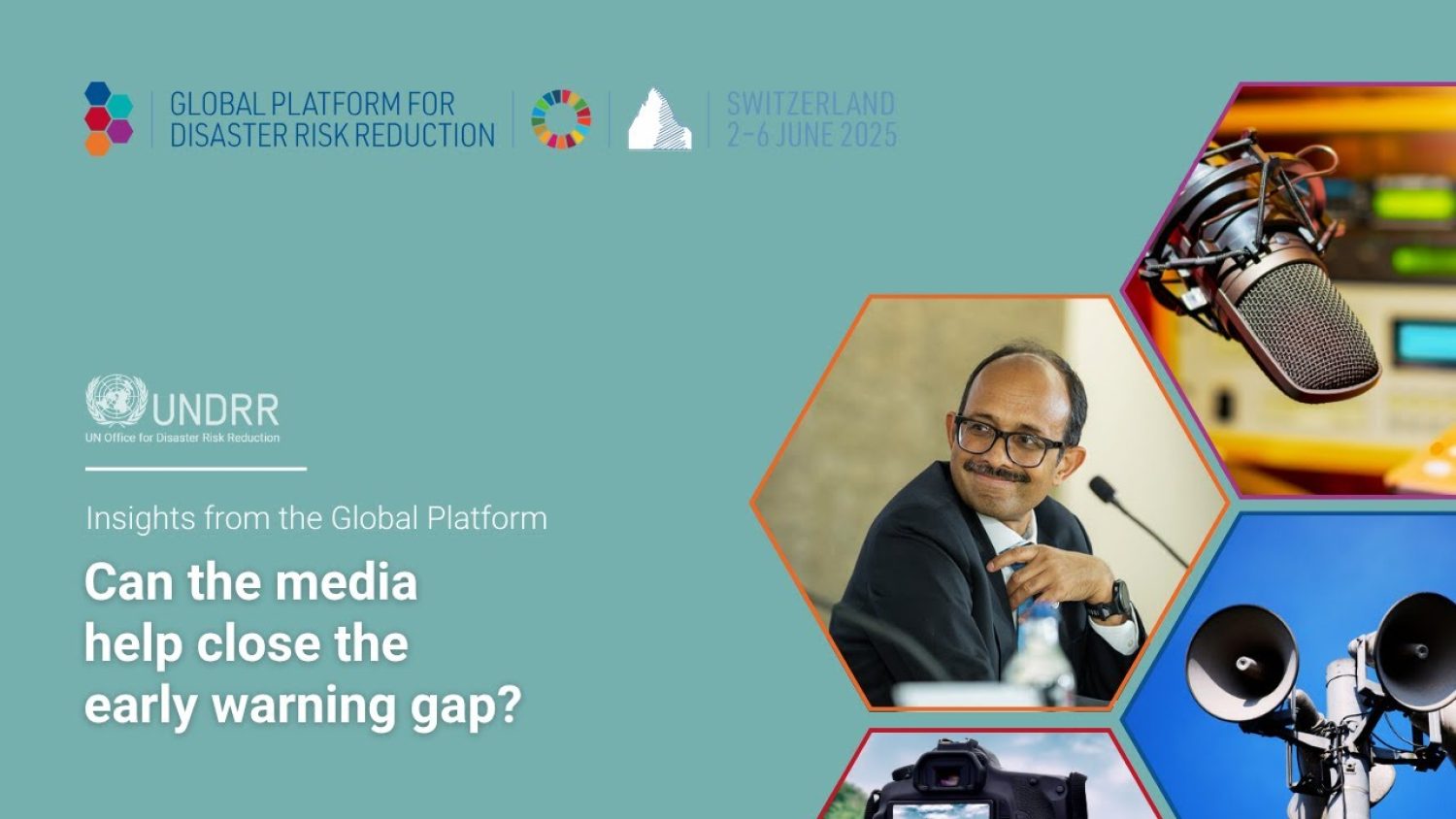
In a video published by the United Nations Office for Disaster Risk Reduction (UNDRR), Kamal Kishore discusses the significant gap in the global implementation of multi-hazard early warning systems. The message highlights that while 108 countries have such systems, 79 of the signatories to the Sendai Framework for Disaster Risk Reduction do not, emphasizing the urgent need to achieve 100 percent coverage. The central takeaway for risk management experts is the speaker’s assertion that the media plays an indispensable role, not merely in disseminating alerts, but in building foundational public risk knowledge in an understandable and actionable manner.
Key Points
The analysis presented by Kamal Kishore centers on the current state of global preparedness as measured by the adoption of multi-hazard early warning systems (MHEWS). A primary concern is the numerical gap in implementation. As of the statement, 108 countries report having MHEWS. However, this figure is set against the 187 countries that adopted the Sendai Framework for Disaster Risk Reduction in 2015. This leaves a deficit of 79 nations that have committed to the framework but have not yet implemented this critical component of risk reduction. The speaker directly poses the question of this gap, stating, “where are the remaining 79?” (8.333), underscoring a collective failure to meet established international goals. While acknowledging that progress has been made since the framework’s adoption, the message stresses that the remaining work must be pursued with a “much greater sense of urgency.”
A significant portion of the message is dedicated to defining the media’s function within the disaster risk reduction ecosystem. The speaker posits that the “media has an absolutely critical role in this whole process” (25.458). This role is framed as being integral to the success of the “Early Warnings For All” initiative, extending far beyond the simple transmission of alerts when a hazard is imminent. The argument is made that the media’s primary value lies in its unique capacity for public education during what are termed “normal times.” This involves proactively building risk knowledge among the general population, making them aware of the specific risks they face in their environments before a crisis occurs. This continuous educational effort is presented as a foundational pillar of an effective early warning system.
The effectiveness of this media role is contingent on the style and format of the communication. The speaker emphasizes that risk-related information must be conveyed to the public in a manner that is “easily understandable, usable, actionable.” This requirement highlights a frequent disconnect between technical risk assessments produced by scientific bodies and the practical information needed by the public to make protective decisions. The message concludes with a strong endorsement of the media’s capabilities in this domain, suggesting that their expertise in communication and public engagement allows them to translate complex data into accessible narratives. This function, it is argued, is something the media accomplishes more effectively than scientific experts, who may be less equipped for broad public outreach.
Context
To fully appreciate the speaker’s message, several key concepts must be understood. The primary subject is the Multi-Hazard Early Warning System (MHEWS). As conceptualized in the provided materials, an MHEWS is a comprehensive platform designed to alert populations to a range of potential disasters, not just a single type of hazard. Its effectiveness is based on four components, one of which is deep-seated “risk knowledge” within the community.
The strategic context for this discussion is the Sendai Framework for Disaster Risk Reduction (2015-2030). This is a global agreement, adopted by 187 countries in 2015, that outlines clear targets and priorities for action to prevent new and reduce existing disaster risks. One of its seven global targets is to substantially increase the availability of and access to multi-hazard early warning systems and disaster risk information and assessments to the people by 2030. The speaker’s reference to the 187 signatories and the goal of 100 percent coverage directly ties the call to action to the commitments made under this international framework.
The initiative mentioned, “Early Warnings For All,” is the operational framework through which the UNDRR and its partners are attempting to achieve the Sendai targets. The transcript specifies that this initiative is conceptualized around four key components. While only one—risk knowledge—is detailed, its description provides insight into the holistic approach being advocated. This approach prioritizes proactive, systemic risk communication over purely reactive, technology-based alert mechanisms.
The speaker, Kamal Kishore, is identified in the video’s description. As the Special Representative of the Secretary-General for Disaster Risk Reduction and Head of the UNDRR, his statements represent the official position of the lead United Nations body on this issue, lending significant weight and authority to the call for urgency and media engagement.
Data gap: The provided fields do not contain the video’s specific tags or keywords.
Implications
The message carries significant implications for various stakeholders in the risk management and disaster reduction fields. The call for accelerated implementation of MHEWS and the strategic focus on the media’s role necessitate a re-evaluation of current practices and policies.
For risk management practitioners and public-sector regulators, the primary implication is the need to formally integrate media partnerships into national and local disaster risk reduction strategies. The statement advocates moving beyond treating media as a passive conduit for government press releases and instead engaging them as active partners in strategy development and public education. This requires establishing formal protocols, providing media with privileged access to technical experts, and co-designing communication campaigns. For the 79 countries lacking MHEWS, the message serves as a direct call to prioritize the allocation of financial and technical resources to close this critical public safety gap, likely signaling increased scrutiny from international bodies.
For investors and private sector entities, the widespread absence of early warning systems in 79 countries represents a material risk to supply chains, assets, and personnel located in those regions. This information should inform geopolitical risk assessments and investment decisions. Furthermore, the call for greater public-private partnership in risk reduction opens avenues for technology, telecommunications, and media companies to contribute expertise and infrastructure to the “Early Warnings For All” initiative, potentially creating new markets for risk-related data services and communication platforms.
Below is a brief action matrix based on the video’s directives:
- International Bodies (e.g., UN, World Bank): Increase targeted financial and technical assistance to the 79 identified countries to accelerate MHEWS implementation. Use the Sendai Framework Monitor to track progress and apply diplomatic pressure where needed. Facilitate knowledge-sharing programs between countries with successful systems and those without.
- National Governments/DRR Agencies: Conduct a formal review of existing media engagement protocols. Allocate budget to fund long-term, continuous “risk knowledge” campaigns in partnership with major media outlets. Integrate media representatives into disaster planning committees and simulation exercises.
- Risk Management Professionals: Proactively build relationships with journalists and media houses covering their sectors or regions. Develop simplified, actionable summaries of complex risk assessments specifically for media consumption. Offer expertise for public-facing content during “normal times.”
- Media Organizations: Invest in specialized training for journalists on the science and policy of disaster risk reduction. Create dedicated editorial desks or programming focused on community resilience and risk awareness. Develop innovative formats for communicating actionable information that go beyond traditional news reports.
The ultimate goal presented is achieving 100 percent MHEWS coverage among the 187 Sendai Framework signatories. While no new deadline is proposed, the stated urgency implies an acceleration of efforts to meet the framework’s existing 2030 targets.
Disclaimer
This article is a professional analysis generated for risk management experts and is based exclusively on the data provided in the “FIELDS” section, which includes the title, description, and transcript from a video published by the UNDRR at the source URL: https://www.youtube.com/watch?v=NAjHDny4hNQ. The content herein does not incorporate any external information, research, or facts beyond what was supplied. The analysis is intended for informational and professional development purposes only.
The platform provider that generated this text does not independently verify the accuracy, completeness, or timeliness of the source material. This document should not be construed as legal, financial, investment, or operational risk management advice. Users should consult with qualified professionals for guidance specific to their circumstances. Any quotes, statistics, or assertions are directly derived from the provided transcript and description and reflect the views of the speaker in the video, not the platform provider.
This text was produced with the assistance of an artificial intelligence system. The AI synthesized the provided data fields to structure and draft this article according to a defined set of editorial rules. The process is subject to the inherent limitations of AI, including the potential for errors in interpretation or synthesis. The final output is a machine-assisted interpretation of the source data, designed to be neutral and professional in tone.