UN: Stronger Risk Governance Needed to Prevent Deadly Disasters
Summary
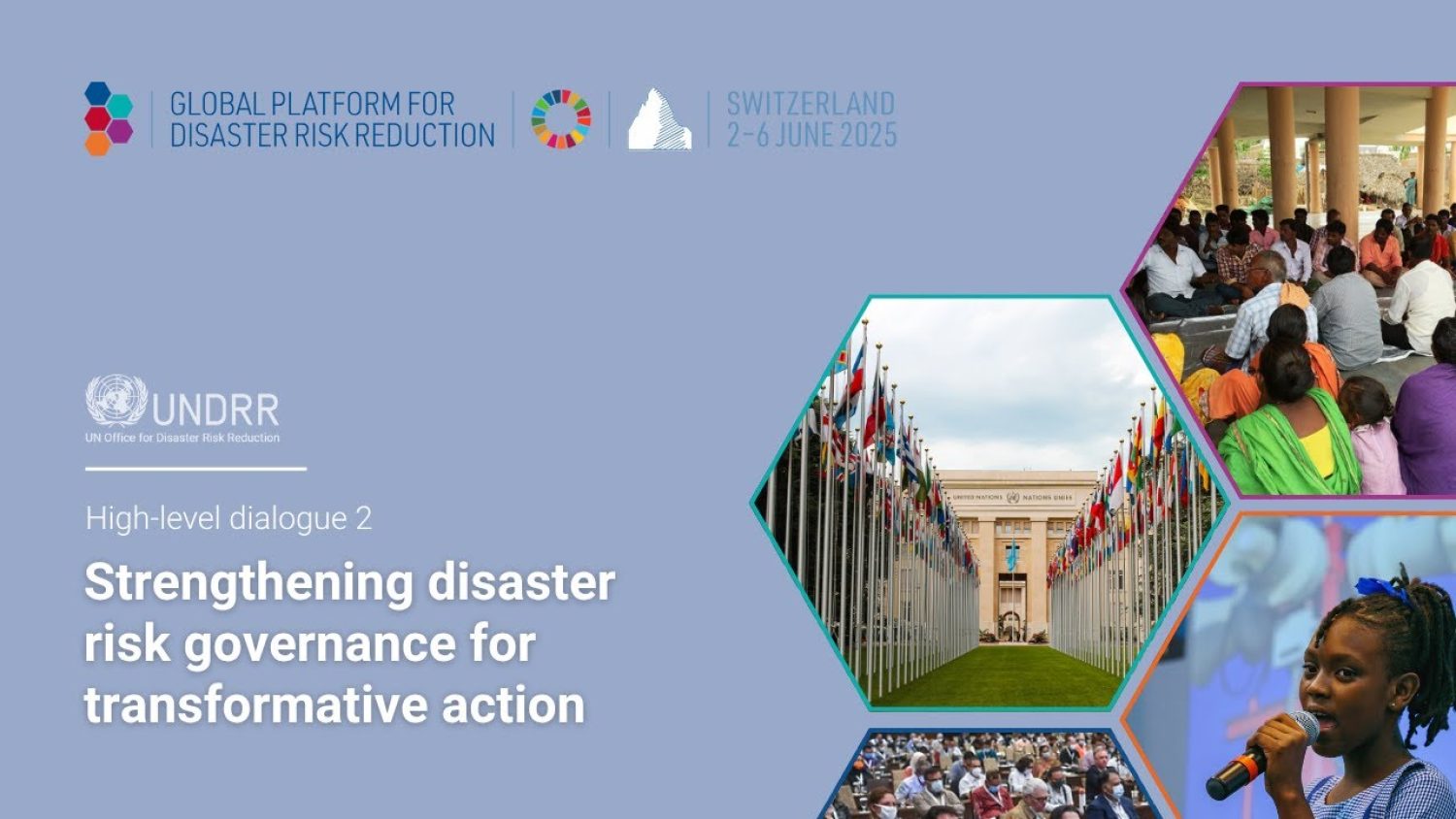
A video titled “Strengthening disaster risk governance for transformative action” by the United Nations Office for Disaster Risk Reduction (UNDRR) outlines the critical function of robust governance in mitigating the effects of extreme weather and other hazards. The presentation asserts that while global progress has been made in establishing disaster risk reduction (DRR) policies and institutions, significant gaps in resources and implementation, particularly at the local level, jeopardize progress toward international goals. The core message emphasizes that preventing hazards from escalating into deadly disasters requires a more integrated, accountable, and well-resourced approach to risk management across all sectors of society.
Key Points
The analysis presented in the video underscores a global advancement in the architecture of disaster risk management. It reports that risk reduction programs have successfully lowered disaster-related mortality and that comprehensive legal and policy frameworks are now in place worldwide to govern a wide spectrum of threats, including “climate, environmental, technological and biological hazards” (51.083). The institutionalization of DRR is widespread, with every country possessing dedicated institutions or focal points. Specific metrics cited include 131 countries reporting national DRR strategies, 110 having established local DRR strategies, and over 100 operating national platforms for DRR. Furthermore, the video acknowledges the increasing involvement of non-state actors, noting that civil society, academia, and the private sector are playing a greater role in building societal resilience.
Despite these foundational achievements, the video delivers a stark warning that progress is fragile and at risk of being undermined. A central challenge identified is the disconnect between policy formulation and practical implementation. The video argues that comprehensive risk management must be strengthened further, with an urgent need to back plans and policies with adequate resources and capacities at all levels of governance. A specific emphasis is placed on empowering local actors and communities, who are often on the front lines of disaster response but may lack the support required to lead effective risk reduction efforts. This resource and capacity gap is presented as a primary obstacle to achieving the targets of the Sendai Framework and broader sustainable development goals.
A key theme is the imperative to break down institutional and sectoral silos to enhance the effectiveness of resilience efforts. The video advocates for a shift away from fragmented planning and implementation toward more collaborative models. It calls for learning how to work across diverse groups of actors to create a more efficient and cohesive approach to building resilience. This requires “joined-up approaches across sectors to build bridges and to make comprehensive risk management a shared goal” (164.75). The success of this integrated model hinges on the free flow of clear and accessible risk information. When communities, local governments, and investors are equipped with such data, they can make informed and proactive decisions to reduce their exposure and vulnerability to hazards.
To foster this data-driven approach, the video highlights the role of the Sendai Framework Monitor as a crucial tool for governance and accountability. Countries are reportedly using the monitor to track their progress, identify implementation gaps, and inform the evolution of national policies. The act of transparently disclosing risks and consistently reporting on progress is framed as an essential step toward creating a more accountable and integrated system of risk governance. This mechanism helps translate raw data into actionable intelligence, forming a continuous feedback loop for policy improvement and ensuring that risk reduction remains a dynamic and responsive process.
Context
The video’s analysis is situated within the global discourse on climate adaptation and sustainable development. The central concept of Disaster Risk Governance, as presented, refers to the comprehensive system of institutions, policies, plans, and strategies that enable coordinated action to manage and reduce disaster risk. It is positioned not as a bureaucratic exercise but as the essential foundation for creating sustainable and resilient societies. Strong governance is what allows for the transformation of inevitable extreme weather events and other hazards from potentially deadly disasters into manageable occurrences. The video stresses that this governance must function cohesively across all scales, from local and community levels to national, regional, and global platforms.
The Sendai Framework for Disaster Risk Reduction is the implicit international agreement guiding the actions described. Although the video does not define the framework in detail, it is referenced as the benchmark against which progress is measured. The statement that current challenges are “jeopardizing progress towards the Sendai Framework targets” (93.0) frames the urgency of the call to action. The Sendai Framework Monitor is therefore presented as the official mechanism for tracking state-level commitments and performance under this global agreement. This contextualizes the discussion within a formal, internationally recognized structure for DRR.
The term Comprehensive Risk Management is used to describe a holistic approach that extends beyond traditional natural hazards. The video explicitly includes climate, environmental, technological, and biological hazards within its scope, reflecting a modern understanding of risk as systemic and interconnected. This approach requires breaking down silos between different government ministries, private sector industries, and academic disciplines to address the complex and cascading nature of contemporary threats.
Data Gaps: The video provides statistics on national and local strategies but does not specify the time period over which this data was collected or which specific countries are included. It identifies a lack of resources and capacities as a key problem but does not quantify the scale of this funding or skills gap. The specific successes in reducing disaster mortality are mentioned but not quantified with supporting data.
Implications
The information presented carries significant implications for a range of stakeholders involved in risk management and governance. The video serves as both an acknowledgment of progress and a call for renewed urgency and strategic redirection. It suggests that the era of policy development must now fully transition to an era of resourced implementation.
Policy Brief for Decision-Makers
The analysis indicates that while the global policy and institutional frameworks for DRR are largely in place, their effectiveness is critically hampered by a persistent implementation gap. This gap is primarily driven by insufficient resource allocation and a lack of capacity at the local level, coupled with fragmented, siloed approaches to planning. To accelerate progress and secure the gains made, governments and their partners must prioritize three core areas: 1) Systematically resourcing local actors to empower community-led risk reduction. 2) Mandating and facilitating cross-sectoral collaboration to build integrated resilience strategies. 3) Enhancing transparency and accountability by committing to regular and robust reporting through mechanisms like the Sendai Framework Monitor. Investing in these areas will create the enabling conditions for proactive, data-informed risk management and ensure that development gains are resilient to future shocks.
Action Matrix for Stakeholders
Stakeholder Group: National Governments and Regulators
Recommended Action: Earmark dedicated national budget allocations for the implementation of local DRR strategies. Develop and enforce policies that mandate risk disclosure for public and private infrastructure projects. Formally integrate DRR and climate adaptation plans across all relevant ministries (e.g., finance, planning, environment, health).
Key Metric/Tool: Percentage of national budget allocated to DRR; number of ministries with integrated DRR plans; national progress reports submitted to the Sendai Framework Monitor.
Stakeholder Group: Local Governments and Communities
Recommended Action: Actively participate in the development and implementation of local DRR strategies. Establish multi-stakeholder platforms that include community representatives, local businesses, and civil society organizations. Use risk information to inform land-use planning, building codes, and emergency preparedness drills.
Key Metric/Tool: Existence and activity level of local DRR platforms; public availability of local risk maps and information; number of community-led resilience projects initiated.
Stakeholder Group: Private Sector and Investors
Recommended Action: Integrate comprehensive disaster risk assessments into investment decisions, supply chain management, and operational planning. Collaborate with public sector entities on resilience-building projects and share risk data and technical expertise. Report on climate and disaster risk exposure in corporate sustainability disclosures.
Key Metric/Tool: Inclusion of physical risk metrics in annual reports; value of investment in resilient infrastructure; participation in public-private partnerships for DRR.
Stakeholder Group: Academia and Civil Society
Recommended Action: Provide technical support and capacity-building for local communities. Conduct independent research to identify and validate risk information and governance gaps. Act as a “bridge” to facilitate dialogue and collaboration between government, the private sector, and communities.
Key Metric/Tool: Number of local officials and community leaders trained; publication of independent risk assessments; number of multi-stakeholder workshops facilitated.
Disclaimer
This document presents a professional analysis based exclusively on the information contained within the source video “Strengthening disaster risk governance for transformative action,” including its title, description, and transcript. The purpose of this analysis is to provide a neutral, third-person summary and interpretation for risk management experts and other interested parties for informational purposes only. It is not intended to represent the official position of the United Nations Office for Disaster Risk Reduction (UNDRR) or any other entity.
This analysis was generated with the assistance of an artificial intelligence system. The role of the AI was to process, synthesize, and structure the provided source material in accordance with a defined set of editorial guidelines for style, neutrality, and format. The content has been reviewed for adherence to these guidelines, but the analysis remains strictly confined to the data provided in the source fields.
The information contained herein does not constitute legal, financial, engineering, investment, or any other form of professional advice. Decisions based on this information are the sole responsibility of the user. For complete context, verification of facts, and a comprehensive understanding of the subject matter, users should consult the original source video, which is accessible at https://www.youtube.com/watch?v=URriF8QD0Es, and seek guidance from qualified professionals. The provider of this analysis assumes no liability for any actions taken or decisions made based on the content of this document.