


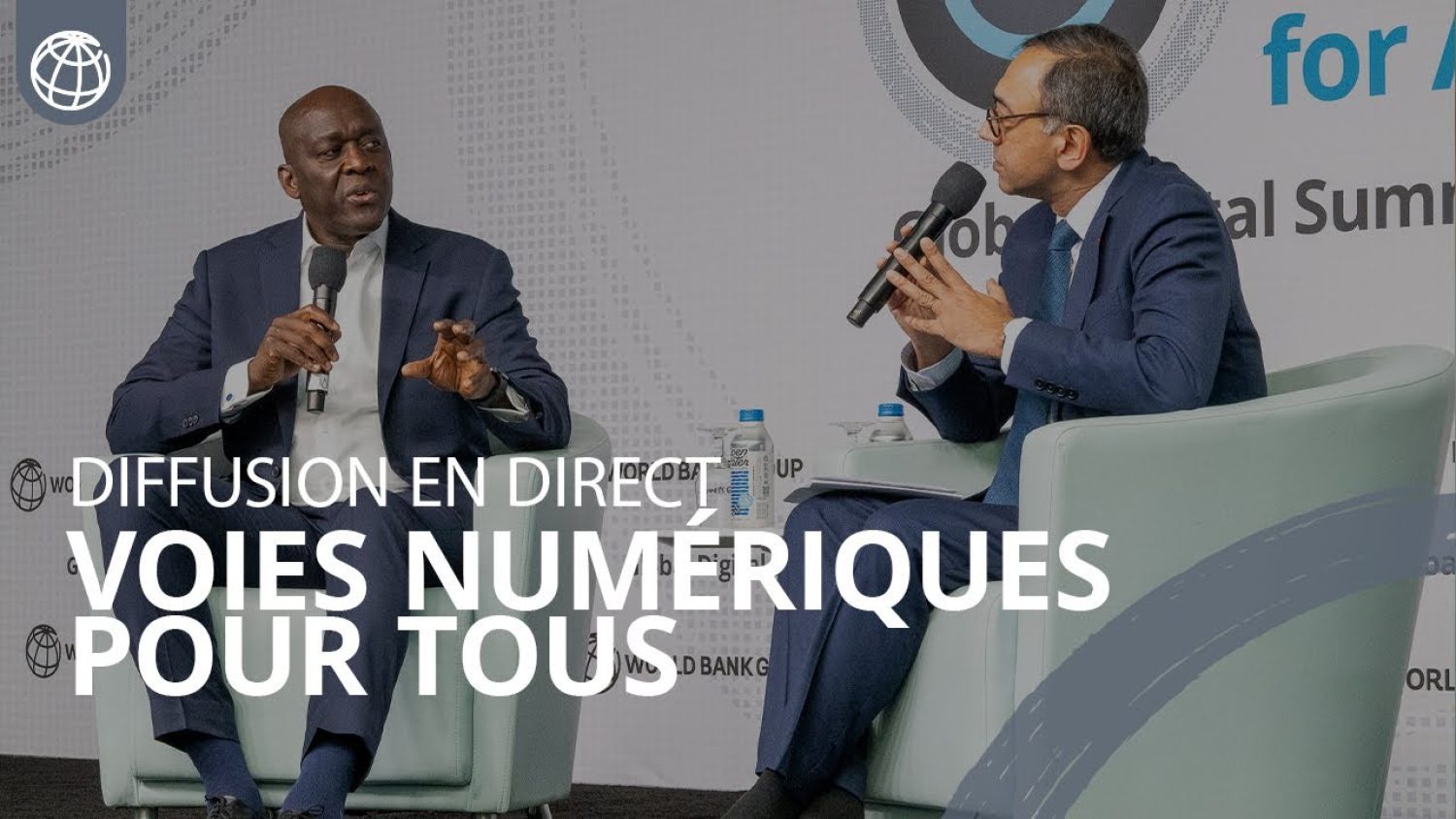







Global Digital Summit 2025: Makhtar Diop, Vivek Badrinath Announced as Key Speakers
Digital Transformation and Inclusive Connectivity: Key Insights from the Global Digital Summit 2025
Event: Global Digital Summit 2025 (Sommet mondial du numérique 2025)
Theme: “Digital Paths for All” (« Voies numériques pour tous »)
Speakers: Makhtar Diop, CEO, International Finance Corporation (IFC) and Vivek Badrinath, CEO, GSMA
This report synthesizes key discussions from a session featuring Makhtar Diop, CEO of the International Finance Corporation (IFC), and Vivek Badrinath, CEO of GSMA, at the Global Digital Summit 2025. The conversation, anchored by the summit’s theme “Digital Paths for All,” delved into critical aspects of global digital transformation, with a particular focus on bridging the digital divide, fostering innovation, and addressing policy challenges in developing economies.
GSMA’s Strategic Vision and the Persistent Digital Divide
Vivek Badrinath, recently appointed CEO of GSMA, opened by reflecting on a major event in Barcelona, which, he stated, had a vast reach with a reported 900 million individuals present, alongside a ministerial conference representing over 140 countries. Key topics included digitization, connectivity, AI, and the rollout of 5G. Badrinath highlighted the “usage gap” as a primary challenge: approximately 3 billion people have mobile network coverage but remain unconnected to the mobile internet, with women disproportionately affected. This gap, he stressed, represents a significant hurdle to digital inclusion.
Makhtar Diop underscored the IFC’s substantial investments in digital infrastructure and questioned how to effectively serve the “bottom of the pyramid” – those most underserved by current digital solutions, emphasizing the need for innovative approaches to create jobs and foster digital infrastructure.
Strategies for Bridging the Digital Divide
Badrinath outlined a two-pronged approach to tackle the digital divide:
- Addressing the Supply Side (Infrastructure): An estimated $1.3 trillion investment is required by 2030 to establish the necessary infrastructure for universal connectivity. This necessitates favorable policies that enable private sector investors, who are responsible for roughly 85% of these investments, to operate effectively.
- Addressing the Demand Side (Usage Gap): The primary barriers to mobile internet adoption are:
- Device Affordability: Collaborative efforts with organizations like the IFC and ITU, as part of a broader coalition, aim to reduce device costs through initiatives targeting taxation, distribution expenses, and financing solutions.
- Digital Skills: GSMA’s training programs have already reached 17 million people, fostering basic digital literacy, addressing safety concerns, and building confidence in using digital tools.
The Role of Satellite Technology and Spectrum Management
The discussion touched upon the role of satellite technology. Badrinath acknowledged its utility for providing coverage and safety in remote, hard-to-reach areas, especially for direct device-to-satellite communication. However, he cautioned that satellites alone cannot fully address the usage gap due to volume limitations and the need for complementary ground infrastructure. He emphasized the critical importance of proper spectrum management to prevent interference with mobile signals.
Diop and Badrinath also explored the complexities of spectrum allocation. Badrinath noted that excessive fragmentation or licensing of spectrum can weaken market structures and lead to inefficient utilization. He highlighted that 4G and 5G technologies benefit disproportionately from larger, contiguous spectrum blocks, enabling far greater capabilities than smaller, segmented allocations. He also pointed out the regulatory evolution surrounding the cost of spectrum, arguing that funds spent on spectrum acquisition could otherwise be invested in network deployment, directly benefiting users.
Taxation and Economic Impact: A Call for Holistic Dialogue
A significant portion of the conversation revolved around the taxation of the telecommunications sector in Africa, particularly in the context of slowing 4G investment. Diop described the situation as a “trust-building exercise” between finance ministers, who often perceive telecom companies as highly profitable, and operators, who argue that high taxes limit their ability to reinvest in crucial infrastructure.
Badrinath echoed this, stating that “trust is a gift” and that the mobile industry is inherently motivated to expand coverage. He cited South Africa’s move to eliminate luxury tax on basic smartphones (while retaining it for high-end devices) as a positive example, recognizing that access to a phone is more critical for economic participation than the tax revenue it might generate.
Diop then proposed that the International Monetary Fund (IMF) should be integral to this discussion, given its focus on macro-economic frameworks and the digital sector’s recognized potential for economic growth. Badrinath agreed, describing a “schizophrenia” in some geographies where policymakers acknowledge digital’s economic benefits but still target telcos for easy tax revenue due to their transparent billing systems. He advocated for a holistic debate, perhaps involving the IMF, to re-evaluate taxation policies based on the digital sector’s broader impact on GDP, positioning telecommunications as a “necessary catalyst” rather than merely a revenue source.
Fostering Digital Ecosystems and Fintech Innovation
The discussion moved to the economic impact of mobile technology, with Diop sharing a compelling example from Dakar, Senegal, where mobile apps have transformed daily life, such as enabling food delivery services – a model that sometimes inverts traditional Western approaches (e.g., “pay after service” with similar recovery rates). This highlights how developing countries’ experiences can offer valuable lessons globally.
Both speakers emphasized the role of telecom operators in building robust digital ecosystems. Badrinath noted that telcos have long supported innovation through incubators and seed funding, with the GSMA Foundation actively backing young entrepreneurs in Africa. He underscored Africa’s “mobile-first” reality, where 95% of customer interactions occur via mobile, enabling “leapfrogging” in development.
Diop highlighted IFC’s strategy to create value chains within countries, using digital infrastructure to connect sectors like agriculture and tourism (e.g., local farmers supplying hotels, reducing reliance on imports). IFC’s investments extend to disruptive technologies like fintech, health tech, and online education.
Regarding skills, Badrinath reiterated GSMA’s “toolbox” for basic internet skills, which has reached 70 million people. He also pointed to the explosive growth of mobile money in Africa, leading globally with $1.7 trillion in transactions. He cited how operators working with fintech have facilitated micro-financing for agriculture, using simple digital education to integrate people into the economic space. Diop provided a concrete example of IFC funding a startup that reduced electronic payment transaction costs from 3% to 0.7%, demonstrating how fintech drives competition, lowers costs for users and businesses, and creates jobs.
Energy, Sustainability, and Future Collaboration
Diop discussed IFC’s significant investments in fiber optics, undersea cables, and data centers, noting a growing synergy with the energy sector. IFC seeks to provide low-cost renewable energy to power telecom infrastructure, leveraging opportunities to advance both digital and clean energy access. Badrinath affirmed GSMA’s commitment to achieving Net Zero by 2050 and the telecom industry’s role as a “productive user” of energy, potentially justifying green energy investments. Mobile payments also facilitate energy payments for consumers, further linking the two sectors.
In conclusion, Badrinath reiterated GSMA’s commitment to mobilizing efforts to close the usage gap, notably through the “Combine Coalition,” and to addressing the gender gap in mobile access (a 15% disparity representing a potential $1.5 trillion boost to global GDP). Makhtar Diop expressed the IFC’s eagerness to continue collaboration, emphasizing its position as a leading investor in African fiber optics. The path forward, he summarized, involves investing in skills, fostering startup ecosystems, promoting competitiveness, and engaging in more constructive dialogue on taxation policies.
Disclaimer:
This report is provided for informational and educational purposes only, based on the content of the “Sommet mondial du numérique 2025 | Makhtar Diop et Vivek Badrinath” video. The opinions expressed and the content presented in this report are solely those of the original speakers in the video and do not necessarily reflect the views or positions of any platform, organization, or entity involved in the production or dissemination of this report. While efforts have been made to accurately transcribe and summarize the discussion, neither the report generator nor its affiliated entities assume any liability for errors, omissions, or misinterpretations of the original content. Readers are encouraged to refer to the original video and official statements from the International Finance Corporation (IFC) and GSMA for comprehensive and definitive information. This report is not intended to provide professional advice of any kind, and reliance on its content is at the user’s own risk.
This report was generated with the assistance of an Artificial Intelligence (AI) model. The AI was used to process, translate, summarize, and structure the provided text transcript of the video. Human oversight was exercised throughout the process to ensure accuracy, neutrality, and adherence to the specified requirements for editorial style and content. While AI tools enhance efficiency and can help in synthesizing large volumes of information, the final review and quality assurance were performed by a human editor.