











World Bank Spring Meetings 2025 to Target Global Job Creation for Economic Prosperity
World Bank Spring Meetings 2025: Employment – The Path to Prosperity
Event Overview:
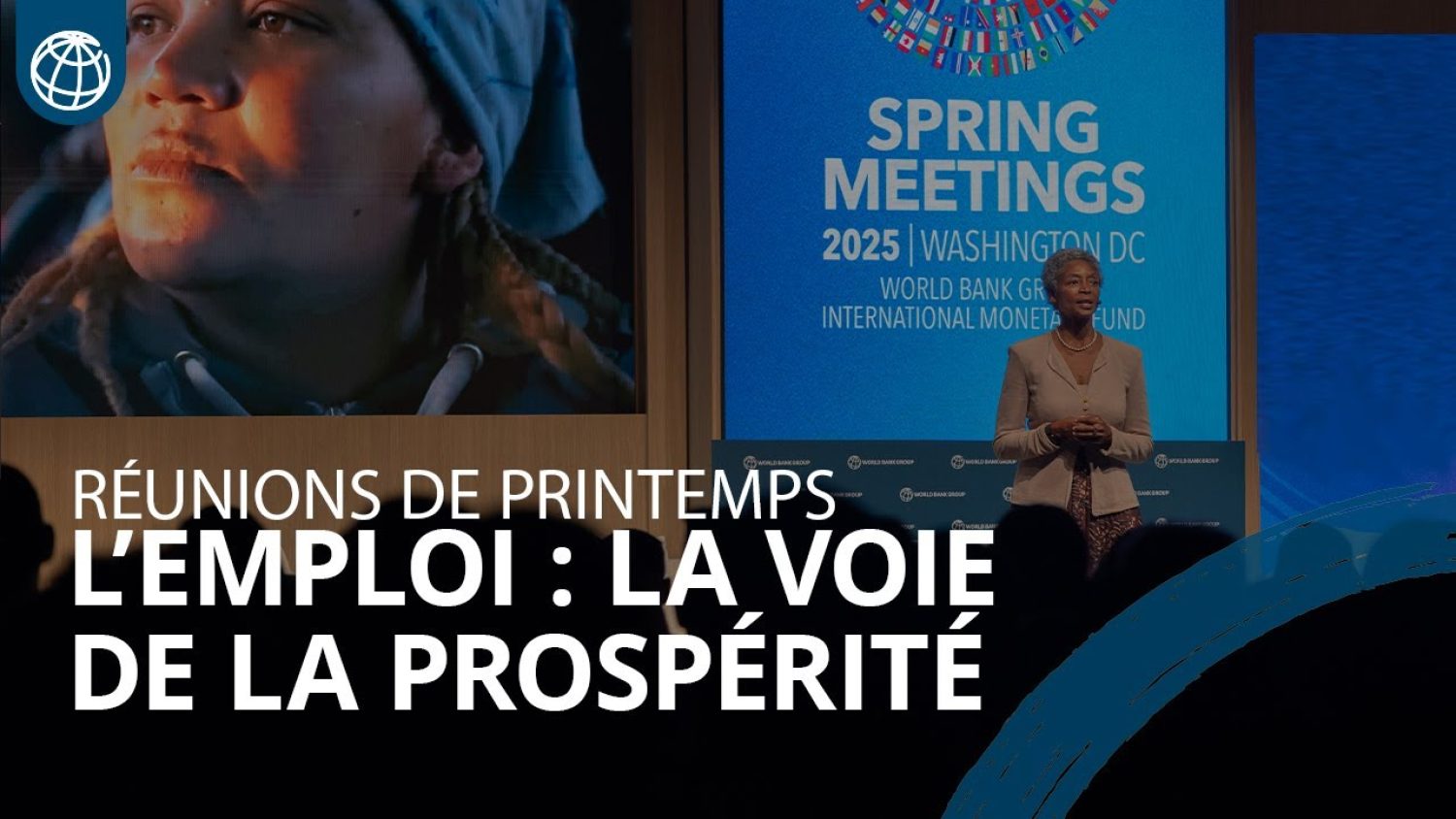
The World Bank Spring Meetings 2025 session, “Employment: The Path to Prosperity,” confronted one of the most pressing challenges of our time: the impending youth employment crisis in emerging and developing countries. With 1.2 billion young people expected to enter the workforce in the next decade against only 420 million projected job creations, the event underscored the urgent need for large-scale, sustainable solutions. Through powerful testimonials, dialogues with private sector leaders, and insights from World Bank Group leadership, the discussions aimed to explore strategies for stimulating more and better job creation, spanning innovation, investment, skills, and high-potential sectors. The overarching goal was to mobilize collective action to ensure every young person has access to decent work.
Executive Summary
The “Employment: The Path to Prosperity” session at the World Bank Spring Meetings 2025 highlighted a critical global challenge: a projected deficit of 780 million jobs for young people entering the workforce in emerging economies over the next decade. The event emphasized that addressing this gap is crucial for economic growth, stability, and poverty reduction. Key themes included the indispensable role of the private sector, the necessity of supportive regulatory and financial infrastructure, and strategic investment in high-impact sectors like renewable energy, physical and digital infrastructure, agriculture, health, tourism, and manufacturing. Discussions also focused on leveraging technology, fostering regional trade, and tackling gender disparities and the informal economy. The World Bank Group’s integrated approach, combining public and private sector tools with knowledge-sharing, was presented as central to realizing the “dignity of work” and fostering shared prosperity.
Full Report
Introduction: The Urgent Call to Action
Julia Chatterley, moderating the event, immediately set a somber tone, reiterating the stark statistic: 1.2 billion young people in developing and emerging markets will reach working age in the next ten years, while only 420 million jobs are expected to be created. This significant deficit poses profound consequences for global stability and prosperity. However, the potential for positive impact is equally immense: by addressing this challenge, economies can strengthen, demand for goods and services can rise, and root causes of conflict and fragility can be mitigated. The World Bank has placed job creation at the core of its mission, and this event served as a multi-faceted exploration of how to achieve it.
Act I: Global Panorama – Voices and Visions
The first segment featured compelling narratives from global leaders, offering diverse perspectives on the challenges and opportunities in job creation.
- Nonkululeko Nyembezi (Chairperson, Standard Bank Group, South Africa): Nyembezi shared a powerful success story from South Africa: the Renewable Energy Independent Power Producer Procurement Programme (REIPPP). This initiative, driven by the amendment of regulations, allowed the private sector to invest over $13 billion, generating 6,000 megawatts of green electricity at some of the world’s lowest costs (3 US cents per kilowatt-hour), without drawing from the national treasury. Crucially, it created over 82,000 jobs directly in construction, operation, and maintenance, and fostered local skills development. Nyembezi emphasized that giving the private sector a leadership role, supported by a clear regulatory environment, unlocks innovation, productivity, and competitiveness, forming a solid foundation for broader economic employment. Access to affordable, reliable electricity is a fundamental enabler for education, health, digital tools, and entrepreneurship.
- Anthony Tan (CEO & Co-founder, Grab, Singapore): Tan highlighted Grab’s journey in Southeast Asia, beginning as a ride-hailing service aimed at safety, particularly for women. Through mobile and location-based technologies, Grab not only connected drivers and passengers but also enabled data sharing, enhancing productivity and access to opportunities. The pandemic underscored the power of the digital economy, as Grab helped millions of Micro, Small, and Medium Enterprises (MSMEs) transition online. Tan provided the example of “Emily’s Chicken Noodles,” which grew from a single shop to five kitchens and 170 employees in Bangkok, leveraging Grab’s data for strategic decisions. He stressed Grab’s mission to advance Southeast Asia by creating economic empowerment for all, noting that access to income restores dignity and fosters hope. The integration of AI for real-time safety monitoring (e.g., detecting signs of danger in audio) further makes jobs more accessible and secure.
- Christina Williams (Lawyer, Jamaica): Williams delivered a deeply personal and poignant account of her journey from a rural Jamaican background, raised by a father who couldn’t read and a grandmother who traveled miles to sell farm produce. Her family’s constant search for opportunities, including her brother’s struggle to afford university and her father’s arduous agricultural work in Canada, illustrated the systemic lack of access to quality education and concrete jobs. Williams, who moved 100 miles to pursue her legal dream, emphasized that the “anguish” of leaving family and community for opportunity is a common experience for youth in developing nations. She argued for a holistic approach to education (beyond tuition to transport and nutrition), viable wages, and flexible, remote work environments. Her powerful conclusion: “the opposite of poverty is justice,” advocating for comprehensive solutions that empower youth to achieve self-sufficiency and dignity.
Act II: The Three Pillars of Job Creation – Policy, Investment, and Sectors
This segment featured a panel discussion moderated by Nicola Galombik, focusing on the foundational elements required for robust job creation.
- Rania Al-Mashat (Minister of Planning, Economic Development and International Cooperation, Egypt): Minister Al-Mashat outlined three critical infrastructure components:
- Economic Infrastructure: Governments must ensure predictable macroeconomic policies and structural reforms to foster competition and break down barriers, allowing the private sector to thrive. The public sector alone cannot generate sufficient jobs.
- Physical Infrastructure: Essential for establishing hubs and connectivity – roads, bridges, electricity grids – which are prerequisites for private sector growth.
- Human Infrastructure: Equipping youth with relevant skills, adapted to private sector needs and emerging trends, through vocational training and university-industry partnerships. The green transition, she added, is not just about environment, but about productivity, skills, and new jobs.
- Douglas Peterson (Special Advisor, S&P Global): Peterson focused on financial infrastructure, emphasizing that capital is fungible and seeks transparent, liquid markets. Investors require data, analytics, and a clear regulatory framework to make informed decisions. He highlighted the importance of accountability, solvency, and allowing for “failure” as a mechanism for rapid recovery and learning. Peterson then introduced the Private Investment Lab (PIL), a World Bank initiative bringing together private sector players to bridge financing gaps. Key PIL strategies include:
- Speeding up capital deployment: By rotating existing World Bank loans.
- Standardization: Developing common frameworks for infrastructure assets to attract more private investors.
- De-risking: Providing guarantees and structuring various tranches (e.g., subordinated debt) to make projects more palatable for different risk appetites.
- Developing an asset class: Creating a recognizable infrastructure asset class to mobilize long-term institutional capital (pension funds, insurance).
- Concessional Capital: Leveraging the World Bank’s ability to deploy concessional capital to make otherwise unbankable projects viable. He also noted the importance of tools to mitigate currency volatility for investors in emerging markets.
- Dilhan Pillay Sandrasegara (Executive Director & CEO, Temasek Holdings): Pillay emphasized Temasek’s role as a long-term investor and steward. He acknowledged the “bankability problem” in emerging markets, especially for infrastructure. To amplify capital, he stressed the need for not just physical but also social infrastructure to uplift communities. Temasek’s initiatives include social inclusion programs and a recent focus on energy transition, prioritizing energy affordability before green energy for developing nations. He advocated for catalytic capital to make “marginally bankable” green infrastructure projects viable, citing that only about 20% of such projects are currently bankable. He also highlighted the potential of FinTech to bridge financing gaps. In the agricultural sector, he stressed the importance of data, micro-insurance, and financing solutions to empower smallholders against risks like climate change and ensure better yields. Digital infrastructure, he added, is critical for creating new services and supporting social entrepreneurs.
- Strategic Sectors for Job Creation: The panel broadly agreed on the World Bank’s identified high-potential sectors:
- Energy (Renewables): As exemplified by South Africa, it offers local job creation, low-cost power, and a foundation for other industries.
- Infrastructure (Physical & Digital): Considered foundational for all other sectors, creating multiplier effects (e.g., airports spur hotels, roads enable manufacturing). Digital infrastructure is key for new services.
- Agriculture: Critical for food security and rural livelihoods, with potential for productivity gains through precision farming, data, and micro-financing/insurance for smallholders.
- Health: Creates jobs (nurses, midwives) and improves workforce productivity and overall well-being.
- Tourism: High employment multiplier (1 direct job creates 4 indirect jobs in Egypt’s experience), promotes peace and cultural exchange, and involves significant value chains (hospitality, construction, services).
- Manufacturing: Essential for value addition, particularly in processing raw materials locally.
Act III: High-Level Conversation – Vision for a Prosperous Future
The final segment brought together top global leaders for a conversation with Julia Chatterley and questions from young people worldwide.
- Ajay Banga (President, World Bank Group): Banga expressed pleasant surprise at the depth of expertise within the World Bank but acknowledged the challenge of breaking down internal silos to achieve synergistic impact across its public, private, capital, and guarantee arms. He conveyed confidence in the World Bank’s ability to act on employment due to its unique, integrated toolkit, encompassing public sector (IBRD, IDA), private sector (IFC, MIGA), and knowledge bank (policy, regulatory, land, labor reforms). He reiterated that “poverty is a state of mind and a state,” underscoring that the dignity of work is the ultimate means of escaping poverty. The five identified sectors are not about outdated outsourcing models, but about creating new, local, higher-quality, value-added jobs, all built upon foundational infrastructure and skills development.
- Michelle Bachelet (Former President of Chile): Addressing a question on gender equality, President Bachelet highlighted urgent measures:
- Recognizing Unpaid Care Work: Women globally bear the brunt of unpaid care (children, elderly, disabled). In Chile, the Central Bank estimated this work to be 25.6% of GDP, significantly more than the mining sector. Public support for childcare, elderly care, and professionalization of care work is crucial to free women for paid employment.
- Equal Pay for Equal Work: Despite laws, discrimination persists. Governments and the private sector must enforce equal pay.
- Visibility & Representation: More women on corporate and public boards leads to better outcomes (e.g., during COVID-19).
She also tackled the pervasive informal sector in Latin America (70% of employment, mostly youth and women), which hinders growth and equity. Solutions include investing in early education, relevant skills training, simplifying regulations for MSMEs, and robust social protection systems (unemployment benefits, reskilling) to incentivize formalization.
- Tharman Shanmugaratnam (President of the Republic of Singapore): President Shanmugaratnam passionately advocated for “growing the global cake” – increasing global prosperity for all. He pointed out that the underutilization of women’s talents is the greatest potential loss to global economic growth. He emphasized the opportunity presented by the 1.2 billion youth, projecting the potential to add another billion people to the global middle class. He cited China’s shifting manufacturing landscape (e.g., 25% of garment/footwear production moving out in 5 years) as a huge opportunity for Sub-Saharan Africa and Southeast Asia, potentially doubling manufacturing GDP in SSA. He also highlighted the “criminal” lack of local value addition in many developing countries, using the example of Ivorian cashews being processed abroad before returning to the country. Regionalization and integration (e.g., AfCFTA) are vital for creating scale, specialization, and learning curves, much like East Asia’s experience. Lower tariffs and friendly trade relations between regional blocs are key to this expansion.
- The AI Imperative: In response to a question about AI’s impact on jobs, President Shanmugaratnam noted the uncertainty regarding whether AI’s displacement effect will outweigh its job-creation potential. He stressed that the outcome depends on immediate actions: investing in education and training throughout careers, especially for the developing world. AI, he argued, holds immense potential for productivity gains across all sectors mentioned (health, precision agriculture – irrigation, fertilizer distribution) which can lift economies out of low-productivity traps and create higher-value, higher-skill jobs. Michelle Bachelet added the crucial point of bridging the digital divide, ensuring access to AI and digital tools in regions currently lacking basic electricity and mobile connectivity. Ajay Banga underscored that AI, when leveraged correctly, is a “magic wand” to enhance productivity and facilitate the creation of the right kind of jobs.
Conclusion: Dignity through Work and Collective Action
Ajay Banga concluded by emphasizing that poverty is both a state of mind and a material condition, and that a job provides not just income but dignity, which is essential for true emancipation. He stressed that the World Bank’s mission of poverty reduction and shared prosperity can only be achieved through job creation, which requires not only financial resources from multilateral development banks but also the ingenuity, capital, innovation, and urgent action of the private sector. The call to action was clear: by working together – governments, private sector, and MDBs – in the right way and with a shared sense of urgency, everyone, especially the youth, stands to gain.
Disclaimers
This report is generated for educational purposes only and is based on the provided transcript of the World Bank Spring Meetings 2025 event, “Employment: The Path to Prosperity.” The interpretations and summaries presented herein do not constitute official statements or endorsements by the platform. All opinions and content are attributed to the original speakers and authors of the event video. The platform assumes no liability for the accuracy, completeness, or use of the information contained in this report. This report was generated with the assistance of an artificial intelligence model. While efforts were made to accurately reflect the content and maintain an expert editorial tone, human review and editing were performed to ensure accuracy, context, and quality in its final published form.