


UNDRR’s PreventionWeb powers global disaster resilience efforts
Summary
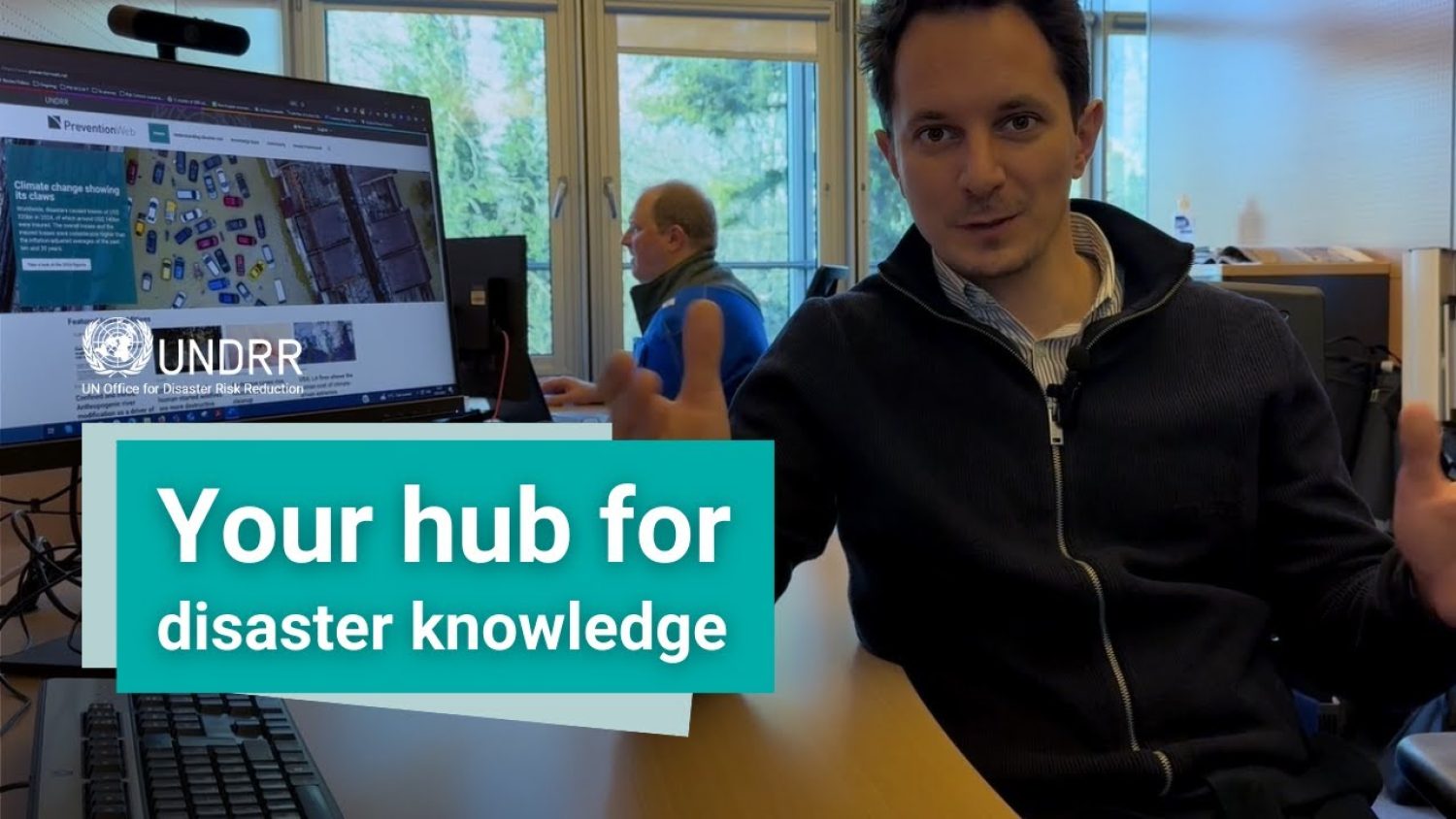
A video released by the UN Office for Disaster Risk Reduction (UNDRR) provides an overview of its PreventionWeb platform, describing it as a leading global resource for disaster risk reduction (DRR) and resilience knowledge. The platform’s primary function is to curate and disseminate reliable information daily from numerous sources to a global audience of professionals and researchers. The main takeaway is that PreventionWeb operates as a centralized, collaborative hub for knowledge sharing, professional development, and community engagement in the disaster resilience sector.
Key Points
The United Nations Office for Disaster Risk Reduction (UNDRR) manages the PreventionWeb platform with the stated mission to provide comprehensive information on DRR and climate change adaptation. According to the video, the platform serves as a knowledge library for a diverse audience, ranging from seasoned professionals and researchers to communities and individuals new to the sector. The core of its operation is a daily curation process, which involves reviewing and updating content to maintain the platform’s status as a reliable source of information. The video states, “we review content from among 400 sources daily to ensure PreventionWeb remains your trusted resource” (38.0). This process aims to consolidate the latest insights, research, and policy documents relevant to disaster risk management. Data gap: The video does not identify the specific 400 sources, their geographic distribution, or the criteria used to select them for review. Furthermore, no metrics are provided regarding the volume of content processed or published daily.
A central feature of the platform’s operational model is collaboration. PreventionWeb is presented not just as a repository of information but as an interactive ecosystem powered by user contributions. The system is designed to allow any individual or organization involved in disaster resilience to submit content. These contributions can include articles, case studies on good practices, announcements for upcoming events, and job postings. This collaborative approach suggests a strategy to foster a dynamic and practitioner-focused knowledge base, where theoretical research is supplemented by on-the-ground experience and opportunities. The platform’s mission is to be a tool for empowerment, with the video noting, “Our mission is simple: empowering professionals, researchers, and communities worldwide with the knowledge to build resilience against disasters” (25.633). Data gap: The video does not detail the submission or vetting process for user-contributed content, nor does it provide statistics on the volume or type of community submissions.
Beyond knowledge dissemination, PreventionWeb is positioned as a significant resource for career and professional development within the disaster resilience field. The platform includes a dedicated job board that lists opportunities from various global organizations. This feature serves both employers seeking qualified candidates and professionals looking for new roles in the sector. In addition to employment listings, the platform provides access to training courses and other professional resources designed to help practitioners stay current in what is described as an “evolving sector.” This focus on professional growth underscores the platform’s role in building capacity and expertise across the DRR community, catering to both new entrants and experienced experts. Data gap: The video offers no specific examples of the training courses available, their providers, or associated costs, if any.
Context
The PreventionWeb platform operates within the global framework of Disaster Risk Reduction (DRR), a systematic approach to identifying, assessing, and reducing the risks of disasters. As managed by the UNDRR, the platform aligns with the United Nations’ broader agenda to mitigate the impact of natural and man-made hazards on communities and economies. The video transcript defines the platform’s scope as encompassing both “disaster risk management and climate change adaptation,” reflecting the interconnected nature of these two fields. In this context, PreventionWeb functions as a key instrument for knowledge management, a critical component of effective DRR. By centralizing information from a wide array of sources, it aims to break down information silos and ensure that practitioners have access to a holistic view of current risks, policies, and solutions.
The platform’s emphasis on “resilience” is also significant. Resilience, in the context of DRR, refers to the ability of a system, community, or society exposed to hazards to resist, absorb, accommodate, adapt to, transform, and recover from the effects of a hazard in a timely and efficient manner. PreventionWeb’s strategy of empowering users with knowledge directly supports this goal. By providing access to cutting-edge research, policy documents, and good practices, the platform equips its users with the intellectual tools needed to design and implement strategies that build resilience. The collaborative model, where “Anyone involved in disaster resilience can contribute” (53.899), further reinforces this by creating a feedback loop of shared learning and continuous improvement within the global DRR community.
Implications
The information presented has several key implications for stakeholders in the risk management and disaster resilience sectors. For practitioners and public-sector agencies, PreventionWeb offers a no-cost, centralized resource that can support evidence-based decision-making and policy formulation. Access to a curated library of global research and case studies can reduce duplication of effort and inform the design of more effective DRR strategies. For regulators, the platform can serve as a repository for international standards, policy frameworks, and best practices, aiding in the development and harmonization of national and local regulations. For investors and the private sector, the platform’s insights into disaster risk and climate change adaptation can inform risk assessments, supply chain management, and investment in resilient infrastructure. The academic and research communities can utilize the platform for disseminating findings and collaborating on new areas of study.
Below is an expert-level policy brief and action matrix based on the video’s content.
Policy Brief: Leveraging Centralized Knowledge for Enhanced Disaster Resilience
The UNDRR’s PreventionWeb platform represents a strategic asset for strengthening global disaster resilience. Its model of curating and disseminating knowledge from 400 daily sources addresses the critical need for timely, reliable, and accessible information in risk management. Policy at all levels—international, national, and local—should formally recognize and integrate such platforms into their DRR frameworks. Government agencies, non-governmental organizations, and private sector entities are encouraged to adopt policies that promote active engagement with the platform, both as consumers of information and as contributors of local expertise and data. Integrating the platform’s resources into professional training and academic curricula can help standardize knowledge and build a common operational picture across the sector. The platform’s collaborative features should be leveraged to foster public-private partnerships and enhance cross-jurisdictional learning, thereby accelerating the global implementation of effective resilience strategies.
Action Matrix for Risk Management Professionals
| Stakeholder Group | Action Item | Objective | Stated Platform Feature |
|---|---|---|---|
| Practitioners & Field Experts | Contribute articles and good practices from local projects. | Share on-the-ground knowledge to inform the global community and validate theoretical models. | User contribution of articles and good practices. |
| Public Sector & Policymakers | Monitor platform for emerging research and policy trends to inform national and local DRR strategies. | Ensure domestic policies are aligned with international best practices and the latest scientific evidence. | Library of cutting-edge research and policy documents. |
| Human Resources & Recruiters | Post job opportunities on the platform’s job board. | Access a specialized, global talent pool of disaster resilience professionals. | Job board for opportunities from around the world. |
| Academics & Researchers | Disseminate research findings through the platform and identify collaborators. | Increase the impact and visibility of research and foster new academic partnerships. | User contribution of articles and access to a professional network. |
| All Professionals (New & Seasoned) | Engage with available training courses and professional resources. | Maintain and enhance professional competencies in an evolving sector. | Training courses and other professional resources. |
Data gap: The video does not provide a publication date, specific metrics on platform usage, content volume, or user demographics, which would be necessary for a full quantitative analysis of its impact.
Disclaimer
This article is an analysis based solely on the information provided in the video titled “Take a look behind the scenes of PreventionWeb | UNDRR” and its accompanying metadata. The platform provider, the UN Office for Disaster Risk Reduction (UNDRR), presents PreventionWeb as a service for disseminating information on disaster risk reduction. The information contained on the platform is curated from third-party sources, and while the provider aims to offer reliable and up-to-date insights, it does not guarantee the accuracy, completeness, or suitability of any content for a particular purpose. Users of the PreventionWeb platform are responsible for their own evaluation of the information and should not rely on it as a substitute for professional advice. The platform provider is not liable for any loss or damage arising from the use of or reliance on the information provided. This analysis may have been created with the assistance of artificial intelligence technologies, which reviewed and synthesized the source data according to a defined set of instructions. The final output has been reviewed and edited by a human editor for accuracy and adherence to journalistic standards based on the provided source material.