


Guatemala school empowers students to lead volcano safety drills
Summary
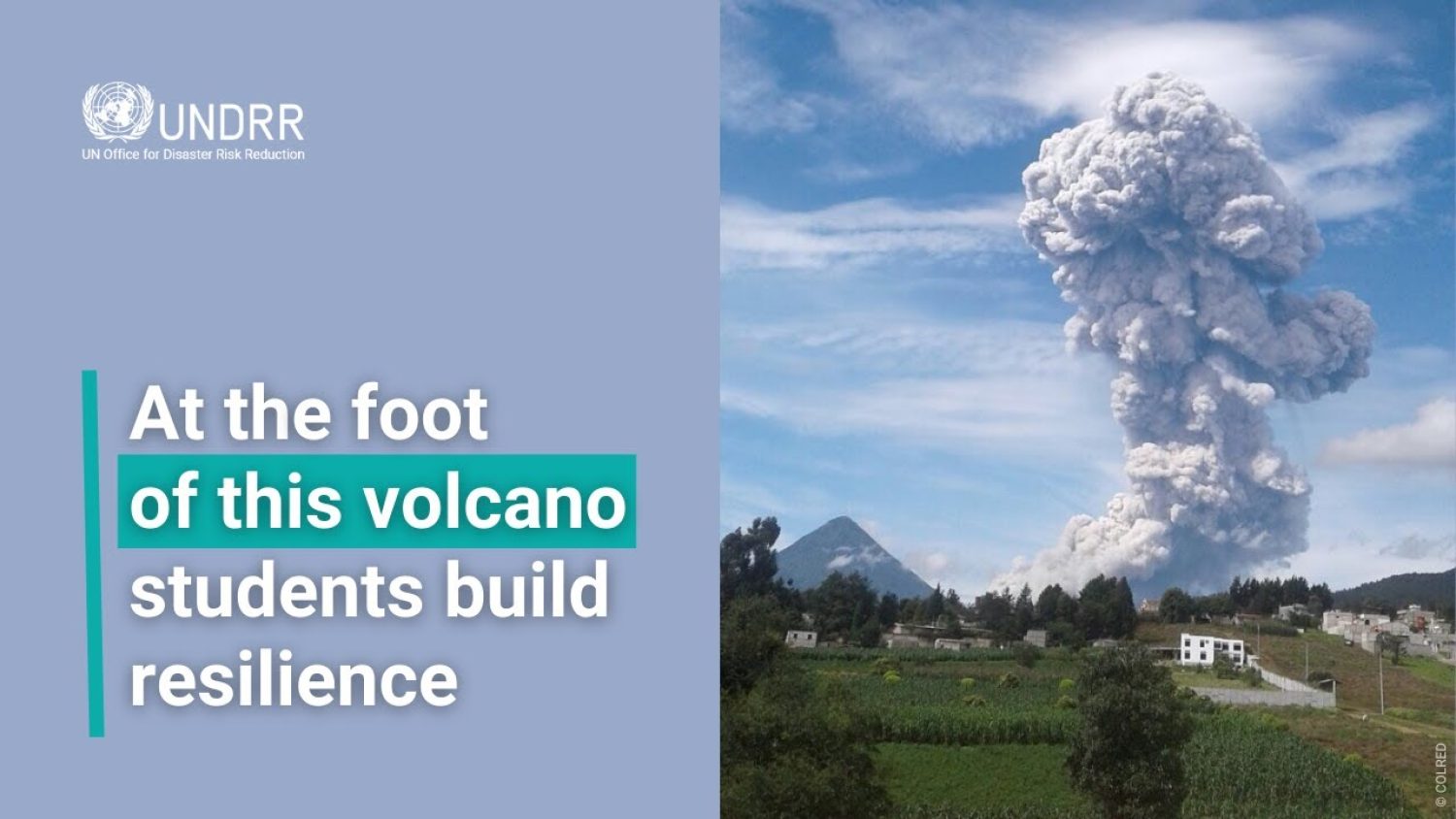
A video produced by the United Nations Office for Disaster Risk Reduction (UNDRR) documents a localized disaster resilience initiative at the Rural Mixed School El Rodeo in Guatemala. Situated near a volcano, the school has implemented a program centered on student leadership, practical preparedness, and structured community engagement to mitigate constant environmental risks. The main takeaway for risk management professionals is the demonstration of a scalable, school-based model that effectively translates national disaster risk reduction strategies into tangible, community-level action by empowering children as primary agents of change.
Key Points
The program at the Rural Mixed School El Rodeo employs a student-centric preparedness model that shifts children from passive recipients of information to active leaders in risk management. A key component is a student emergency brigade, established by teacher Patricia Moran, which is responsible for leading emergency drills within the school. This hands-on leadership is complemented by practical, individual preparedness measures, such as the maintenance of a 72-hour emergency backpack. Student Melany Alonso articulated the necessity of this kit, stating it must be ready for immediate use in an emergency, pre-stocked with essentials like clothing and water, as there would be no time to gather them during an event. This approach embeds personal responsibility and proactive planning directly into the student experience.
A central feature of the model is its effectiveness in transferring preparedness knowledge from the school to the wider community. The video posits that when students lead on preparedness, their families follow. Ms. Moran noted that “The children take the message home” (53.6), encouraging their families to adopt similar practices, such as preparing their own 72-hour backpacks and storing clean drinking water. This dynamic transforms the school into a powerful hub for disseminating risk reduction information and behaviors, leveraging the influence of children within the family unit to foster a broader culture of resilience throughout El Rodeo. The initiative demonstrates a practical method for achieving widespread community buy-in for preparedness measures.
The program’s success is reinforced by a formal, structured approach to stakeholder alignment between the school and the community. School Director Marlene Rodrigues explained that regular meetings are held with parents, occurring as frequently as monthly or every two months. The explicit purpose of these meetings is to ensure that the school principal, teachers, and parents are all synchronized on the emergency strategies to be implemented in case of an incident. This systematic collaboration institutionalizes communication and guarantees that response protocols are understood and agreed upon by all parties, creating a unified and coherent community response framework rather than relying on ad-hoc or informal communication channels.
The initiative is presented as a successful localization of a national strategy, illustrating how Guatemala’s national disaster system is implemented at the grassroots level. The school serves as a microcosm where national-level policy becomes operational. By focusing on education, practical application, and community-wide collaboration, the El Rodeo program provides a tangible case study in decentralizing disaster risk reduction (DRR). It underscores the principle, advocated by the UNDRR, that building a safer future is achievable when children are empowered to learn, practice, and lead in disaster resilience, effectively embedding risk management into the fabric of the community.
Context
The program is situated in the community of El Rodeo, Guatemala, a location described as being “in the shadow of a volcano” and facing “constant risk.” This geographic and environmental context is the primary driver for the proactive disaster risk reduction measures detailed in the video. The ever-present threat from the volcano necessitates a state of perpetual readiness among the population. Data gap: The specific name of the volcano, its current activity level, eruption history, and the specific vulnerabilities of the El Rodeo community are not detailed in the provided information.
The initiative is framed within the operational philosophy of its promoter, the United Nations Office for Disaster Risk Reduction (UNDRR). The UNDRR’s stated mission is to help global decision-makers understand and act on risk. The organization operates on the principle that there are no “natural disasters,” only natural hazards that become disasters when they impact vulnerable communities. This school-based program in El Rodeo is presented as a practical application of this philosophy—an effort to reduce vulnerability and build resilience, thereby preventing a natural hazard from becoming a disaster. The program aligns with the UNDRR’s broader goal of supporting the 2030 Agenda for Sustainable Development by strengthening community resilience against shocks.
The core programmatic components detailed are replicable tools in disaster risk reduction. The “72-hour emergency backpack” is a standard preparedness tool designed to enable individual self-sufficiency for three days following an incident. The “student emergency brigade” is an organizational structure that formalizes student participation in safety protocols, moving them from passive drill participants to active leaders. Finally, the formalized “parent-teacher collaboration,” consisting of regular, strategy-focused meetings, represents a governance mechanism for ensuring community-wide alignment and shared responsibility in emergency planning. As the director stated, “regular meetings are organized so that the principal, teachers, and parents are all aligned” (75.879).
Implications
For disaster risk practitioners and public-sector emergency managers, the El Rodeo model provides a compelling case study for leveraging existing social infrastructure—namely schools—as force multipliers for community-wide resilience. The program demonstrates a cost-effective method for decentralizing DRR implementation by training and empowering local champions like teachers and students. This approach is highly scalable and adaptable for other communities facing persistent natural hazard risks. It highlights the value of investing in “soft” infrastructure, such as education and community organization, as a critical complement to “hard” infrastructure investments in risk mitigation.
For regulators and policymakers, this initiative supports the integration of practical, hands-on DRR education into national school curricula. The success of the student brigade, which, according to Ms. Moran, “are the ones who lead the drills” (36.039), suggests that policy should not only mandate safety education but also create frameworks that empower students to take active leadership roles. Furthermore, the formalized parent-teacher meetings suggest a best-practice model that could be encouraged or mandated in designated high-risk zones to ensure robust school-community emergency planning and communication. The video provides a clear justification for policies that fund and support teacher training in DRR and facilitate structured community engagement through educational institutions. Data gap: The video provides no quantitative data, such as the number of students involved, the frequency of drills, or metrics on changed family behaviors, which would be essential for a formal policy impact assessment.
A policy brief based on this case study would recommend that ministries of education and national disaster management agencies collaborate to develop standardized, age-appropriate DRR curricula that emphasize student leadership. An action matrix for implementation could include the following:
- Objective 1: Institutionalize Student Leadership in School Safety.
- Action: Establish guidelines for the creation of student-led emergency brigades in all schools located in high-hazard areas.
- Metric: Percentage of target schools with an active and trained student brigade.
- Objective 2: Integrate Practical Preparedness into Family Life.
- Action: Launch a national campaign, distributed through schools, promoting the 72-hour backpack and a family emergency plan.
- Metric: Periodic surveys measuring the percentage of households with a completed emergency kit and plan.
- Objective 3: Formalize School-Community DRR Collaboration.
- Action: Mandate that school safety plans include a documented schedule of regular DRR strategy meetings with parent representatives.
- Metric: Compliance rates and documented outcomes from parent-teacher engagement meetings.
Disclaimer
This article is an analysis based exclusively on the metadata, description, and transcript provided for the video titled “At the foot of this volcano students build resilience | UNDRR,” sourced from the official UNDRR YouTube channel. The information is presented as documented by its producer, the United Nations Office for Disaster Risk Reduction. No independent verification of the individuals, events, or program outcomes depicted in the source material has been conducted by the authors of this analysis. All assertions and quotes are drawn directly from the provided text. This report was generated with the assistance of artificial intelligence technologies, which processed the source data. The final content was reviewed and edited by a human editor to ensure accuracy relative to the source and adherence to neutral, professional standards. This analysis is intended for informational purposes for risk management professionals and does not constitute professional, legal, or financial advice. Any decisions or actions taken based on this content are the sole responsibility of the reader. The platform and its authors assume no liability for errors, omissions, or the use of this information.