


Guatemalan women lead disaster prevention with local knowledge
Summary
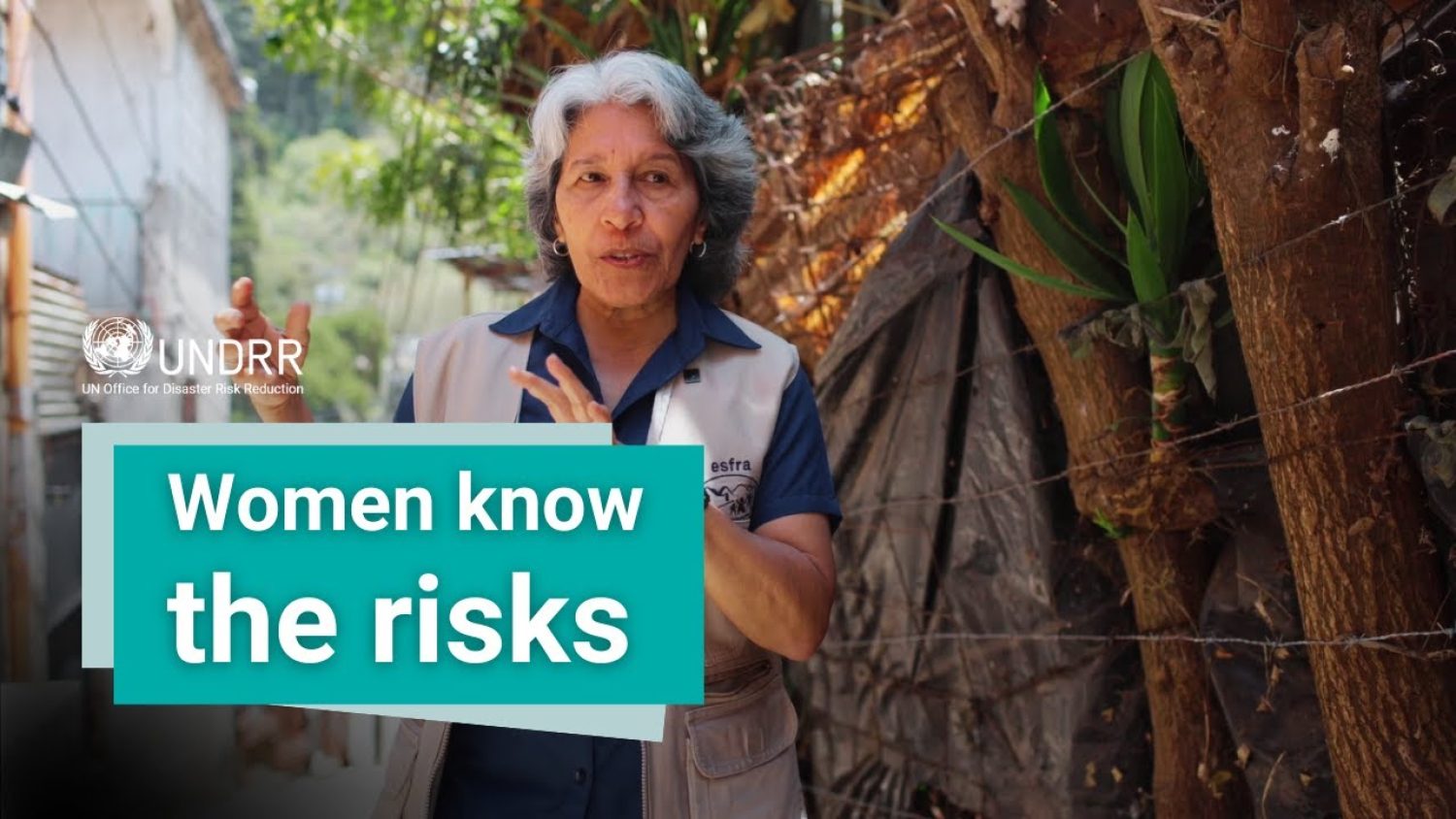
A video published by the United Nations Office for Disaster Risk Reduction (UNDRR) documents an initiative in Guatemala where women are leveraging their lived experience to identify and mitigate local disaster risks, particularly flooding. The key takeaway for risk management professionals is the demonstrated value of incorporating gender-differentiated, community-level knowledge into formal risk assessments, as women were able to identify specific threats that were reportedly overlooked by men in the same community. The video posits that this inclusion leads to more effective, grounded, and inclusive disaster risk reduction (DRR) strategies.
Key Points
Who: The initiative features Guatemalan women, including Lissette Minera and Norma Choc, who are presented as leaders in the movement. The video contrasts their risk perceptions with those of men in their community. The program, called the School for Female Leaders in Local Action, is supported by organizations identified as the ESFRA Foundation and the Community Platform for Resilience Practitioners. The video was produced by the United Nations Office for Disaster Risk Reduction (UNDRR).
What: The core of the initiative involves training women to formalize their observational knowledge of local environmental risks. According to a speaker identified as a representative of the ESFRA Foundation, when men in a community were asked about the effects of torrential rains, they stated, “there are hardly any floods in the community” (21.839). In contrast, women identified specific impacts, pointing to three houses affected by rising water levels and a local school where one side was being undermined by water. Participants in the leadership school learn to conduct community mapping to formally identify such threats and vulnerabilities. The stated goal is to turn this grassroots awareness into concrete, lifesaving action and community resilience.
When: The video was published on August 7, 2025. Data gap: The specific timeframe during which the interviews and community assessments took place is not provided.
Where: The events depicted take place in Guatemala. Data gap: The specific community or region within Guatemala is not identified in the provided materials.
Why: The initiative aims to reshape how disaster risk is understood and managed by integrating the unique perspectives of women. The video argues that women, through their roles and long-term presence in their communities, possess deep “lived knowledge” that allows them to observe subtle but critical environmental changes and vulnerabilities that others may miss. By empowering women and including their insights in disaster risk governance, prevention strategies can better reflect local realities, thereby creating safer and more resilient communities.
How: The empowerment and integration process is facilitated through structured programs like the School for Female Leaders in Local Action. This school provides training to “strengthen women’s skills and leadership” (73.48). A key practical tool employed is community mapping, a participatory method where residents identify and document local threats, such as flood-prone areas or structurally weak buildings. This process transforms anecdotal observations into systematic data that can be used for planning and action, turning risk awareness into practical readiness.
Context & Background
The video operates within the professional field of Disaster Risk Reduction (DRR), a systematic approach to identifying, assessing, and reducing the risks of disasters. The sponsoring entity is the UNDRR, the UN’s focal point for such efforts globally. The central concept highlighted is “lived knowledge,” which the video defines as an “understanding of the risk from their experience” (48.719), suggesting it is a form of hyperlocal, qualitative data derived from long-term observation and immersion within a specific environment. This contrasts with more traditional, top-down risk assessment models that may rely on quantitative or satellite data without capturing ground-level realities. The video frames the inclusion of this knowledge, particularly from women, as a method to uncover “invisible risks” and build more effective community-based resilience. Data gap: Detailed background on the ESFRA Foundation and the Community Platform for Resilience Practitioners, including their specific roles, funding, and history, is not provided.
Implications & Next Steps
For risk management experts, the video presents a compelling case study on the operational value of gender-disaggregated, qualitative risk data. It implies that standard risk assessment protocols may be incomplete if they do not include mechanisms for soliciting and validating insights from different demographic groups within a community. The discrepancy reported between male and female perceptions of flood risk in Guatemala underscores a potential systemic blind spot in risk identification. For practitioners in corporate, governmental, and non-governmental sectors, this suggests that meaningful community engagement, specifically designed to empower and listen to women and other marginalized groups, is not just a social good but a critical component of accurate risk analysis and effective mitigation strategy. The use of community mapping is presented as a practical, replicable tool for translating this “lived knowledge” into actionable intelligence. This approach can enhance the precision of vulnerability assessments and ensure that risk reduction investments, such as infrastructure improvements or early warning systems, are targeted at the most critical areas identified by those with the most intimate knowledge of the local environment. Data gap: The video does not state a follow-up timeline, specific metrics for success, the scale of the program, or plans for its expansion. No quantitative data on the reduction of damages or casualties resulting from this approach is provided.
Disclaimer
This document is an analysis based exclusively on data provided for a video titled “How women’s knowledge is reshaping disaster risk in Guatemala | UNDRR” (Video ID: LKS4V84IM2s), published by the United Nations Office for Disaster Risk Reduction. The information presented herein is intended for risk management professionals for informational and analytical purposes and does not constitute professional advice. The analysis is strictly limited to the content of the provided title, description, transcript, and associated metadata. No external research or validation of the claims made in the video has been conducted. The accuracy, completeness, and timeliness of the source material are assumed but not guaranteed. The platform providing this analysis makes no representations or warranties, express or implied, regarding the content of the source video or this derivative summary. All interpretations and conclusions drawn are based on the available information and should be cross-referenced with primary sources and expert consultation before being used for decision-making. This text was generated with the assistance of an AI language model, and while it was reviewed for accuracy against the source data, the process is subject to the inherent limitations of AI technologies. The end-user assumes all risk associated with the use of this information.