Women scientists bridge science and communities for resilience
Summary
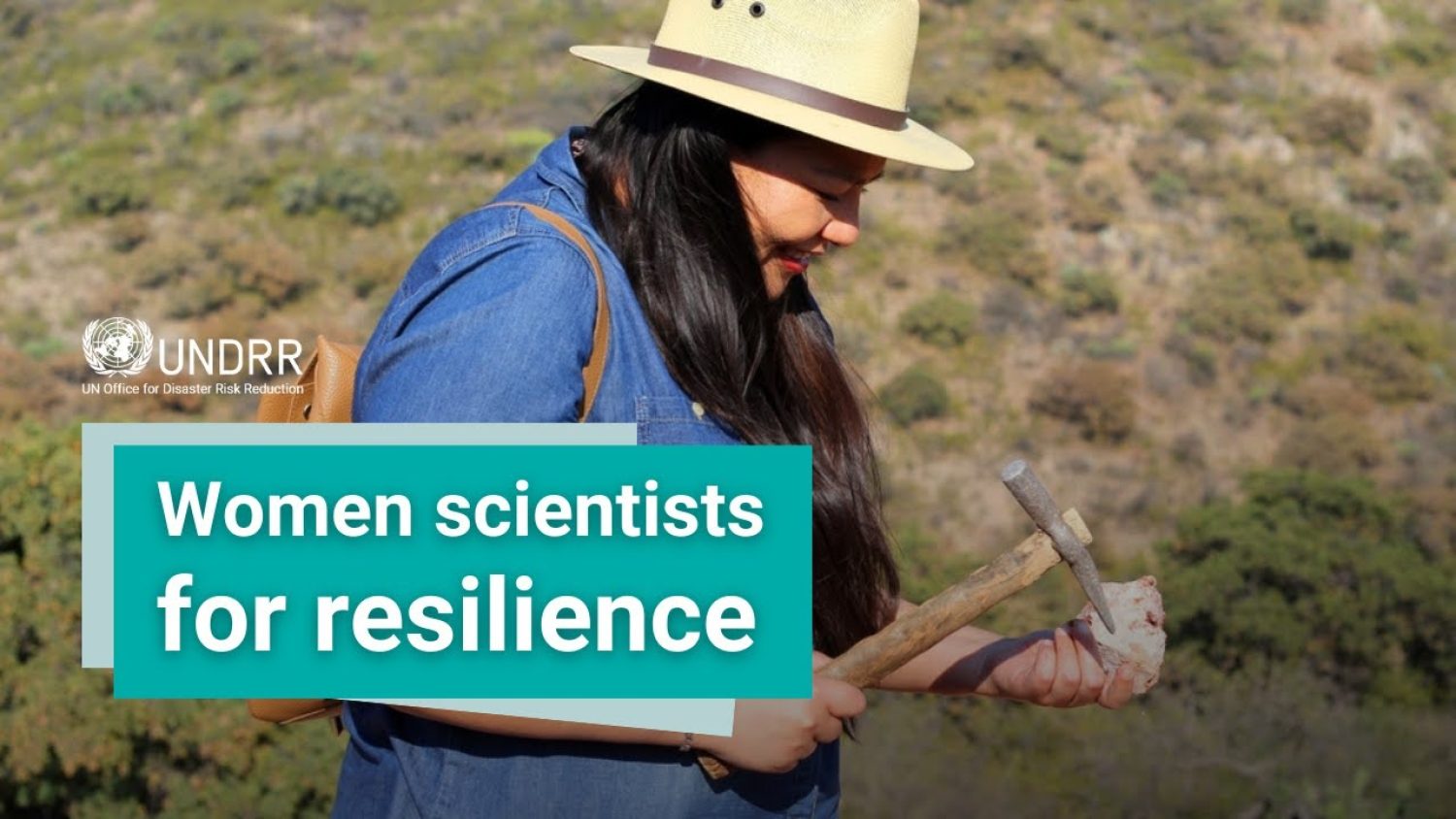
A video published by the United Nations Office for Disaster Risk Reduction (UNDRR) presents a strategic framework for disaster risk reduction centered on proactive anticipation rather than reactive response. The material argues that women scientists are fundamental to this approach, serving as a critical link between scientific data and community-level action. The primary takeaway for risk management professionals is the assertion that integrating emerging technologies with local, participatory knowledge systems, facilitated by diverse scientific experts, is a necessary condition for building effective, sustainable resilience in an increasingly complex world.
Key Points
Who: The video was published by the United Nations Office for Disaster Risk Reduction (UNDRR). It features an unidentified speaker discussing disaster resilience strategies. The intended audience includes public policy makers, scientists, and local action leaders, with a specific focus on the role of women scientists in the field. Data gap: The name, title, and affiliation of the speaker are not provided in the supplied information.
What: The presentation outlines a model for disaster risk reduction (DRR) that emphasizes the importance of anticipating risks. It highlights the function of a group identified as “the RSTAG” as a space for collaboration between science, public policy, and local communities. The video asserts that women scientists play a “specific and strategic role” (19.267) in this process by translating rigorous knowledge into practical decisions. Furthermore, it posits that the effectiveness of emerging technologies such as artificial intelligence, remote sensing, and climate modeling is conditional upon their integration with open, collaborative, and locally-oriented knowledge systems.
Why: The core argument is that the growing complexity of global challenges necessitates a more advanced and inclusive approach to disaster management. According to the speaker, strengthening the participation of women scientists is not merely a matter of equity but is “a necessary condition for improving our capacity to respond and adapt” (35.834). The ultimate goal articulated is to foster communities that are more resilient, better informed, and more interconnected through the strategic application of both scientific knowledge and technology.
How: The proposed method for enhancing disaster resilience involves creating and leveraging spaces of “articulation between science, between public policy and local action” (10.2). This framework aims to convert technical knowledge into life-saving decisions. For technology, the video advocates for connecting advanced tools with participatory community processes and a deep understanding of local context, ensuring that technology serves community needs directly rather than functioning as a standalone solution.
Context & Background
The video establishes a foundational context for modern disaster risk reduction (DRR) as a discipline that must evolve from reaction to anticipation. This perspective, outlined in the video’s description, frames resilience as the outcome of a deliberate process that transforms data and science into concrete action. The content positions this proactive stance as essential for navigating a world of increasing complexity and interconnected risks.
A key entity mentioned is “the RSTAG,” which the speaker describes as an important forum that has helped recognize the value of anticipating risks. This body is characterized as a collaborative space where technical knowledge is translated into policy and local action. Data gap: The provided materials do not define the acronym “RSTAG” or provide further details on its composition, mandate, or organizational structure.
The discussion differentiates between the mere existence of technology and its effective application. The video argues against a technocratic-only approach, instead promoting a socio-technical model where tools like AI and open data platforms are embedded within community-centric frameworks. This integration is presented as the key to unlocking their full potential. The effectiveness of these technologies is seen as directly proportional to their connection with “participatory processes and a deep understanding of the local context.” This highlights a strategic preference for context-aware solutions over one-size-fits-all technological deployments.
Implications & Next Steps
For risk management practitioners, the video’s message implies a need to broaden the scope of expertise involved in resilience planning. It advocates for moving beyond purely technical risk assessments to incorporate a more holistic approach that values the role of scientists, particularly women, as communicators and facilitators. Practitioners are encouraged to evaluate and deploy technologies not only for their data-processing capabilities but for their adaptability to local needs and their ability to integrate with open, collaborative systems. The central challenge identified is ensuring technology empowers communities, making them more resilient and informed.
For policymakers and regulators, the content suggests a need to create and support institutional structures that facilitate meaningful dialogue between scientists, government bodies, and local communities. This includes championing policies that promote equity and increase the participation of women in scientific and technical advisory roles. The video implicitly calls for governance frameworks that prioritize the development of open and accessible knowledge systems, ensuring that data and analytical tools are oriented toward serving public and community interests.
For organizations and investors in the DRR space, the video points toward a more nuanced investment strategy. It suggests that funding for technology should be paired with support for building local capacity, fostering community engagement, and strengthening the science-policy interface. The long-term value of an investment may depend less on the sophistication of the technology itself and more on how well it is integrated into the social and institutional fabric of the communities it is intended to serve.
Data gap: The video transcript and accompanying data do not outline specific next steps, timelines, metrics, or follow-up actions to implement the described vision. follow-up timeline not stated.
Disclaimer
The information presented in this article is based on an analysis of content from a video provided by the United Nations Office for Disaster Risk Reduction. This summary and analysis are intended for informational purposes for risk management experts and do not constitute professional, legal, or technical advice. The platform provider does not guarantee the accuracy, completeness, timeliness, or suitability of the information contained in the source material or this derivative analysis. Any decisions made or actions taken based on this content are the sole responsibility of the user. The user should seek independent, expert consultation before making any decisions related to disaster risk reduction, technology implementation, or policy formulation.
The discussion of emerging technologies, including artificial intelligence, remote sensing, and climate modeling, is conceptual. The platform provider offers no warranties, express or implied, regarding the performance, reliability, or outcomes of any specific technology mentioned. AI-assisted technologies, including those used in the generation of this analysis, are tools that process information from a defined set of data. Their outputs may contain inaccuracies, omissions, or reflect biases present in the source data. All outputs from such systems should be independently verified by qualified human professionals before being relied upon for critical decision-making. The use of this analysis is at the user’s own risk, and the platform provider disclaims all liability for any direct, indirect, incidental, or consequential damages arising from its use.