Nexus Foundry
Systemic Risk Intelligence for Cascading Failure, Hidden Dependencies, Compound Shocks, and Strategic Resilience
Host Community is the pathway for local communities, Indigenous institutions where applicable, neighborhood organizations, youth groups, local associations, cooperatives, community leaders, and affected populations to shape Nexus work from the ground up. Communities are not treated as beneficiaries, data sources, or consultation endpoints. They are hosts of knowledge, safeguards, participation, local evidence, lived-risk intelligence, and place-based resilience priorities
As Host Communities, local actors can convene community forums, host Competence Cells, identify risks, validate data, shape technical assistance needs, support public-safe reporting, and define conditions for legitimate participation. The purpose is to ensure that smart infrastructure, climate adaptation, energy systems, water projects, health resilience, digital services, food systems, education programs, and local economic development are grounded in community reality and protected by clear safeguards
MEMBERSHIP PARTNERSHIP SPONSORSHIP

Unlocking the Power of Spatial Finance 🌌 for Disaster Readiness 📡
Transforming risk management by integrating DRR, DRF, and DRI into a seamless, proactive system. Leveraging cutting-edge geospatial analytics and innovative financial triggers, NE enables real-time insights and rapid resource mobilization to build resilient communities and drive sustainable growth
###### Local Evidence
Host Communities bring lived experience, place-based intelligence, local hazard knowledge, access barriers, service conditions, environmental observations, and social trust signals into Nexus evidence systems. This improves accuracy and prevents purely top-down planning
###### Community Forums
Host Communities can convene local forums for risk mapping, needs assessment, safeguard review, youth participation, public-safe reporting, community benefit design, and project feedback. These forums help convert community priorities into structured records
###### Public Trust
Community hosts help verify whether proposed programs are legitimate, understandable, useful, and safe. This is essential for projects that affect land, data, infrastructure, services, livelihoods, or protected knowledge
###### Protected Participation
Community hosting requires participation safeguards, privacy controls, protected knowledge handling, accessibility, language access, grievance routes, and consent discipline where applicable. Community participation must be structured, non-extractive, and correctionable
###### Place-Based Cells
Community-based Competence Cells can focus on water access, food security, housing, health, safety, digital inclusion, climate exposure, local jobs, land issues, mobility, education, or public service gaps
###### Local Continuity
Host Communities support continuity after pilots, events, or external technical assistance ends. They help monitor outcomes, report issues, request correction, and maintain local learning Innovation Lab
##### Discover;
##### Learn;
##### Build;
Integrated Learning Account (ILA) is the Nexus capability-record system that brings learning, contribution, competence, applied work, recognition, and workforce readiness into one governed, learner-controlled account. It integrates supervised applied learning through WILPs, contribution recognition through iCRS, competency architecture through SCF, commons participation through DICE, production literacy through MPM, risk-intelligence learning through GRIx, and value and readiness reporting through iVRS. The result is a unified record layer where students, staff, contributors, reviewers, maintainers, public authority participants, community leaders, industry teams, and professional cohorts can build evidence-backed records of learning, contribution, review, demonstrated capability, and pathway progress
The ILA turns real Nexus work into structured capability formation. Learners can participate in Academy modules, host-based Competence Cells, Quests, Bounties, Builds, Foundry programs, Nexus Universe, Nexus Core Build, National Working Groups, National Portfolios, public-safe reporting, technical assistance, data governance, AI, cyber, climate, energy, water, food, health, justice, industry, digital public infrastructure, resilience finance literacy, and lawful handoff readiness. Each record can carry scope, evidence, review level, privacy controls, portability rules, expiry, renewal, correction status, and archive logic, making capability visible without reducing people to résumé claims, informal participation, or unverifiable credentials
The strategic value of ILA is trust without overclaim. It helps universities, employers, host institutions, industry hosts, CSOs, communities, Nexus Academy, National Nexus Consortiums, Working Groups, and Competence Cells understand real capability formation while preserving strict boundaries. ILA records do not create degrees, professional licenses, employment entitlement, procurement qualification, public authority approval, financeability, insurability, product approval, certification, deployment authorization, or execution authority by implication. ILA is the human-capability layer of Nexus: a trusted pathway for learning through serious public-good contribution, strengthening national capacity, and preparing the next generation of Nexus contributors, reviewers, maintainers, experts, hosts, and implementation-ready teams
###### MPM
Nexus mechanism for localized manufacturing, repair systems, circular production, resilient supply chains, micro-factory learning, and distributed production readiness. It helps hosts, industry, universities, communities, National Working Groups, and Competence Cells structure production capability into evidence-backed records, safety controls, learning pathways, technical baselines, Marketplace/Registry objects, and lawful handoff dependencies without implying product approval, procurement status, manufacturing authority, or execution
###### iCRS
Nexus contribution tracking and recognition mechanism for Quests, Bounties, Builds, Academy learning, Foundry work, Universe participation, Core Build activity, Competence Cells, maintenance, review, safeguard work, and correction. It records contribution value, learning credits, reviewer credits, maintainer credits, support credits, and public-good standing without becoming compensation, token speculation, procurement advantage, certification, employment status, governance control, or execution authority
###### DICE
Nexus commons infrastructure for data, knowledge, software, evidence, learning, contribution, Guilds, safeguards, readiness, and archive. It provides the trusted collaboration environment where datasets, methods, schemas, dashboards, public-good software, GRIx objects, iVRS outputs, MPM objects, WILP records, iCRS records, and handoff dependencies can be governed, reused, reviewed, permissioned, corrected, and archived without turning openness into extraction, access into ownership, discovery into procurement, or contribution into authority
###### GRIx
Nexus risk-intelligence and resilience-indexing mechanism for structuring disaster risk, systems risk, frontier technology risk, infrastructure risk, WEFH-B risk, cyber-physical risk, and national portfolio risk into governed, uncertainty-aware, public-safe records. It supports DRR, DRF, DRI, Nexus Observatory, Nexus Foundry, Nexus Universe, and national risk mapping without becoming a rating, public warning, regulatory classification, insurance score, investment signal, or public authority decision
###### iVRS
Nexus value, risk, readiness, resilience, safeguard, and public-good reporting mechanism. It converts fragmented claims about impact, sustainability, systems risk, finance-readiness, public-good contribution, national capacity, stakeholder participation, and lawful handoff dependencies into scoped, evidence-linked, reviewable, public-safe, and correctionable reports without implying assurance, certification, rating, financeability, procurement status, public authority approval, or execution
###### SCF
Nexus competence, skills, workforce, and capability-formation framework. It connects Nexus Academy, ILA, WILPs, iCRS, Competence Cells, host institutions, employers, universities, National Working Groups, and Nexus Foundry to build future-ready capability across AI, climate, cyber, energy, water, health, food, cities, justice, industry, public-good technology, and lawful implementation support without becoming professional licensing, employment guarantee, social scoring, procurement qualification, or certification authority Research0%Design0%Innovation0%Acceleration0%Policy0%

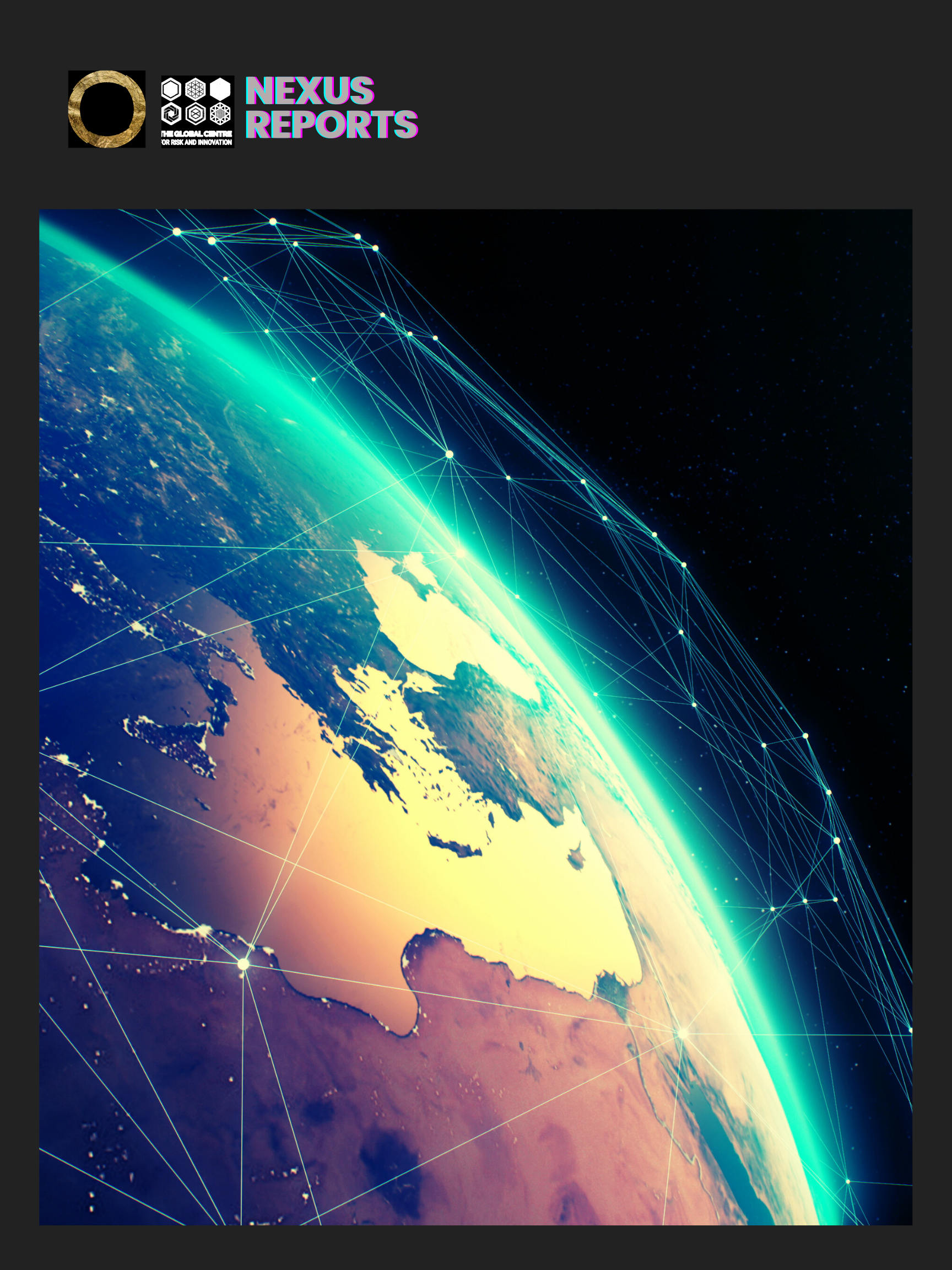
The Nexus Reports provide comprehensive evaluations of country-specific risks and opportunities, focusing on biodiversity, ecosystem services, climate change vulnerabilities, socio-economic risks, the food-water-energy nexus, and exponential technologies. Drawing on authoritative sources, these reports offer tailored policy recommendations, detailed analyses, and practical case studies, integrating global scientific research to manage risks and drive sustainable development
###### Community Voice
Hosting a Cell gives communities a formal pathway to shape evidence, priorities, safeguards, and implementation logic. It turns community voice into structured contribution rather than informal consultation
###### Better Projects
Projects designed with community-hosted Cells are more likely to address real needs, avoid harm, respect local knowledge, and produce benefits that communities can see and verify
###### Opportunity Access
Hosting can connect communities to Academy pathways, technical assistance, youth programs, local jobs, provider engagement, public authority learning, and project-readiness opportunities
###### Local Capability
Community members, youth, leaders, and local institutions can build skills in risk mapping, digital tools, data literacy, public-safe reporting, project monitoring, and resilience planning
###### Safeguard Power
Community Cells can identify exclusion, rights risks, accessibility gaps, data concerns, environmental harms, and participation failures before they become conflicts or implementation failures
###### Correction Rights
Community-hosted Cells create a record-based pathway for challenging errors, updating evidence, correcting public claims, escalating concerns, and ensuring that commitments remain visible